Robotics Fast Cars and recycling

Robotics, fast cars, and recycling

How Lithium battery recycling can make or break our planet and the electric vehicle market

By:

Nadine |

March 11, 2022

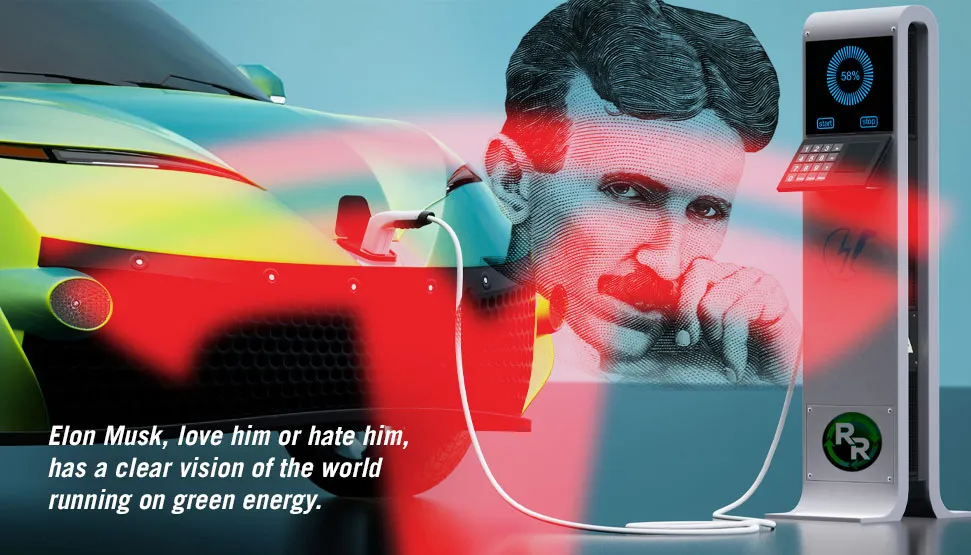
We’ve all heard of the company Tesla. They’re breaking barriers on the ground and up in space. Elon Musk, love him or hate him, has a clear vision of the world running on green energy and we’re here for it. Electric vehicles are now being made by multiple car manufacturers and they all use Li-ion batteries (Lithium-Ion)…but these are posing a problem for the future of green transportation.
LITHIUM BATTERY RECYCLING

Although electric vehicles are rising in popularity, this growth cannot continue without a sustainable recycling solution. We, as a local and worldwide recycling community, need to not only reach for the stars but take care of this planet we call home. Sustainable transportation while a great solution for today needs to be designed for tomorrow.

Let’s start by understand what electric vehicle (EV) batteries are comprised of. The majority of the materials are made up of a mixture of lithium, manganese, cobalt, and nickel. These are materials that we can find through mining and refining natural resources, but obtaining these materials can be expensive and damaging to the environment. Continuously mining for these materials is not something the earth can sustain long term. We have to find a way to recycle the batteries we have already made, as each EV uses hundreds of these batteries to operate.

CAR BATTERY RECYCLING

It’s estimated that only about 5% of Li-ion batteries are currently being recycled, and much less in some countries. The reason why is that it is an extremely energy-intensive processing to recover the materials in a usable form. Basically, it’s currently costing more recycle batteries than make new ones. When lithium, manganese, cobalt and nickel are processed they turn into a substance called a black mass…it’s about as bad as it sounds.


“In 10 to 15 years when there
are large numbers of them
(electric car batteries)
coming to the end of
their life, it’s going
to be very important
that we have a
recycling industry.”


– Paul Anderson from the
University of Birmingham.

So, what can we do to continue creating energy-efficient vehicles and not dig up our earth to do it? We need to create a worldwide standard for recycling Li-ion batteries. This means that the recycling process needs to be considered at the beginning of each battery’s life. Engineers will need to focus on Li-ion battery designs that can later be disassembled and the materials can be recovered into a usable form.

One of the proposed and seemingly most efficient solutions to date is to use robotics
We also need to turn to our engineers and mechanics and the field of robotics. One of the proposed, and seemingly most efficient solutions to date, is to use robotics to disassemble and retract usable materials from dead Li-ion batteries. We’ve already harnessed this tech to manufacture cars, it seems like a natural progression that we use robots to recycle cars.

At Regional Recycling, we can take Li-ion electric vehicle batteries if they are under 11 lbs. This is a part of our expanding battery recycling program. We also accept lead-acid automotive batteries and household batteries. For more information about recycling your batteries with Regional Recycling follow this link.

The province of BC is taking strides to extend our green initiatives and offer more Li-ion battery options. This is part of the Gov of BC’s 5-year EPR action plan to include these batteries as a regulated product. For more information about this action plan follow this link, Extended Producer Responsibility Five-Year Action Plan 2021-2026.

During the fall of this year, we are seeing recycling leaders hold conferences, sign LOIs and continue talks to create a recycling standard for the production and recycling of Li-ion batteries. This is a step in the right direction and we are getting closer to a solution with each month that passes. While we may not all be flying to the stars, we must make strides to preserve our precious planet.

Regional Recycling is proud to work with the Major Appliance Recycling Roundtable (MARR) the not-for-profit organization that manages British Columbia’s recycling program for end-of-life major household appliances. Working on behalf of appliance manufacturers and other regulated producers, MARR helps ensure that unwanted appliances are collected, recycled, and processed responsibly across the province.

Operating under BC’s Recycling Regulation, MARR oversees an approved stewardship program that keeps valuable materials in circulation, ensures environmentally responsible handling of hazardous components, and helps reduce waste sent to landfill. The program is governed by MARR’s Board of Directors and is designed to make appliance recycling convenient, accessible, and environmentally responsible for British Columbians.

In addition to Regional Recycling, there are over 200 certified Major Appliance Recycling Roundtable (MARR) collection sites throughout BC that make it easy to recycle responsibly. There is no charge to drop off eligible appliances, and you can be confident that every appliance is processed safely, with recyclable materials recovered and hazardous components handled by licensed professionals.

image for recycle large appliances post shows person in front of garage with old large appiances - text - is one of these taking up space in your garage

You can recycle all of the following residential products with Regional Recycling:

  • Full-size Refrigerators – Refrigerator and refrigerator freezer combinations. Includes built-in and free-standing models.
  • Compact Refrigerators – Refrigerator or refrigerator-freezer combinations that are 6.4 cubic feet or less in volume. Includes beer kegs, wine dispensers and wine coolers.
  • Freezers – Chest, upright, and compact freezers, plus under the counter freezer drawers and ice makers.
  • Window Air Conditioners – Operate through the wall or are window-mounted.
  • Portable Air Conditioners – Can be moved from place to place.
  • Dehumidifiers – Free-standing and can be moved from place to place.
  • Clothes Washers – Top and front-loading. Includes stacked laundry units and those that also dry clothes.
  • Clothes Dryers / Built-In Steam Cleaners – Top and front-loading. Includes stacked laundry units.
  • Dishwashers – Built-in, portable or convertible.
  • Ranges – Can include a surface cooktop and oven.
  • Built-In Ovens – Can have separate warming drawers, combination with microwave oven or double-walls.
  • Surface Cooking Units – Installed into the countertop where the controls are either integrated into the unit or installed separately.
  • Range Hoods & Downdrafts – Can be separate or connected from the cooking unit.
  • Built-In and Over the Range Microwaves – Built-in with or without hood vent combinations permanently installed microwave ovens.
  • Food Waste Disposers – Integrated into the plumbing of a household.
  • Trash Compactors – Permanently installed or portable.
  • Built-in Electric Hot Beverage Dispensers – Mounted under the counter or built-in.
  • Water Coolers – Mounted under the counter or built-in.

To learn more about how to recycle your large appliances with us, please see our large appliance recycling page on our website. We look forward to seeing you at one of our depots!

Please Note: Our Burnaby location does not recycle large appliances due to space restrictions.


0 Comments

Submit a Comment

Your email address will not be published. Required fields are marked *

READ MORE ARTICLES
Can I recycle this container?

Can I recycle this container?

“Can I recycle this container?” is a question we often get asked. It seems that everyone knows you can recycle plastic bottles, pop cans and beer bottles in BC for a deposit refund! But did you know that these items shown below can be recycled too?

Introducing our new recycling drop-off service—Fast Drop!

Introducing our new recycling drop-off service—Fast Drop!

We’re excited to announce our new drop off service that doesn’t require sorting —Fast Drop! The simplest way to get a full cash refund on your recycling.

We developed Fast Drop as response to a growing need for a contact-less recycling solution. It maximizes the safety of our customers and staff by minimizing the amount of time people spend in our depot. It’s also a super-easy way to get refunds on your empties!

Recycle Large Appliances in BC

Recycle Large Appliances in BC

Why Recycle Large Appliances? When you recycle large appliances it does more than free up space—it helps to conserve valuable natural resources and helps protect the environment from potentially damaging materials being released into the air, water or ground. Large...

How to Market Your Bottle Drive

How to Market Your Bottle Drive

Having a successful bottle drive depends on strong promotion and clear organization. Knowing how to market your bottle drive will help to ensure your event raises a lot of money for your cause (often between $1,000 and $1,500, and sometimes more than $3,000) while...

Recycling Power Tools

Recycling Power Tools

Why It Matters and What Can Be Reused Power tools make projects like construction, home improvement, and yard tasks faster and more efficient. But when your tool stops working, many of these time-saving tools end up in landfills instead of being recycled, repaired or...

en_CAEnglish